
Linder Myers
Welcome to Linder Myers, a legal blog providing advice on compensation claims in the UK


How We Can Help You
At Linder Myers, we aim to provide clear, impartial information about making a compensation claim in England and Wales. Our goal is not to offer specific legal advice but to help you understand the process, what to expect, and how to make informed decisions when seeking professional support.
We focus on educating readers about the steps involved in different types of claims, the principles behind no win no fee agreements, and the importance of choosing the right solicitor. By understanding the basics, you can approach your claim with confidence.
Cases You Can Learn About
We cover a lot of different topics on our website, such as:
Road Traffic Accidents
such as car accidents, passenger accidents, and injuries sustained while riding your bike or motorcycle
Workplace Accidents
such as injuries on construction sites, accidents caused by no training, or slips and falls
Medical Negligence
such as birth injuries, misdiagnosis cases, medication errors and surgical errors
Public Place Accidents
such as injuries sustained in shops, supermarkets and restaurants, allergic reactions and food poisoning
Serious and Catastrophic Injuries
such as cases involving life-changing injuries and severe psychological damage
How Can I Choose The Best Solicitor For My Case?
Choosing the right solicitor is essential for achieving the best outcome. A good solicitor will combine expertise, clear communication, and a focus on your needs. Here’s an overview of the types of things you should look for when choosing the best solicitor for your case.
1. Relevant Experience and Specialisation
Different claims require different skills. For example, medical negligence or complex workplace accidents demand specialist knowledge. Ask if the solicitor regularly handles your type of claim and whether they can share examples of similar cases they’ve successfully managed. Also check for accreditations in their chosen field. Top personal injury law firms like Legal Expert showcase these on their website.
2. Proven Track Record
A strong history of winning cases and achieving fair settlements is a key factor. Check if they are accredited by organisations like the Law Society’s Personal Injury Accreditation Scheme or recognised by legal directories such as Chambers or The Legal 500.
3. Communication and Transparency
You should feel comfortable asking questions and receiving straightforward answers. A good solicitor will explain the process, timelines, and fees clearly. You should always be able to meet with your solicitor if you want, regardless of where you’re based. For example, if you suffered an injury in London, you can get advice from expert law firms like www.personalinjurysolicitorslondon.co.uk and get advice on your case.
4. Client Feedback
Look at independent reviews and testimonials, paying attention to comments about professionalism, responsiveness, and support. Quality and trusted personal injury solicitors like JF Law showcase these reviews on their website.
5. Funding Options
If they offer a no win no fee agreement, ensure you understand the success fee and any deductions.
6. Are They Registered and Regulated?
It’s vital to ensure that your chosen lawyer is registered and authorised by the Solicitors Regulation Authority (SRA) and the Law Society


What Can You Claim Compensation For?
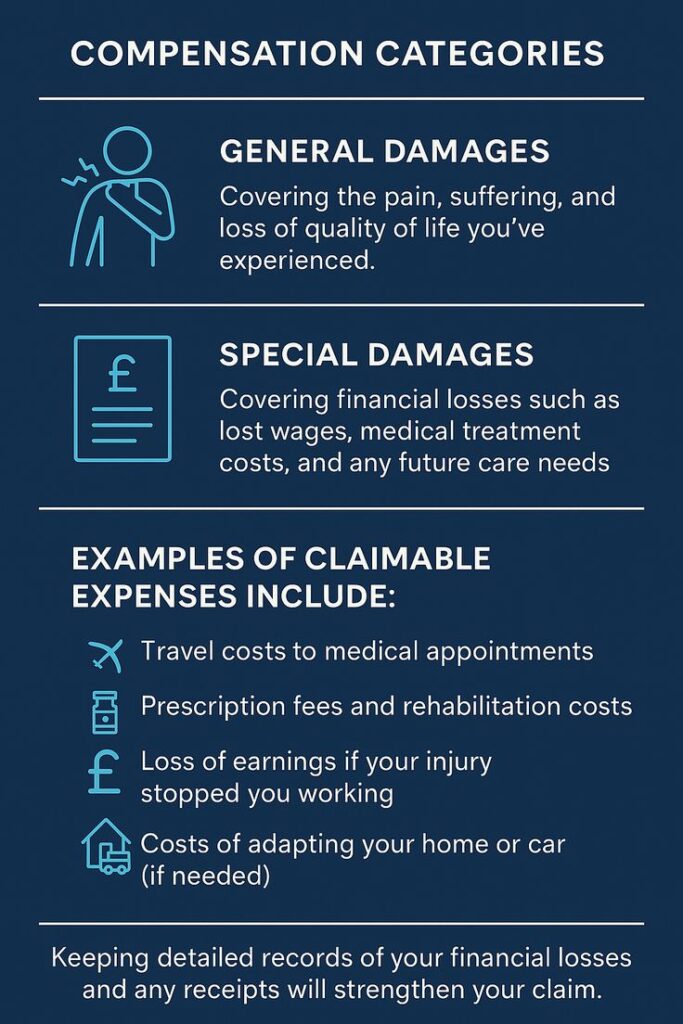
Compensation typically falls into two categories:
General Damages – Covering the pain, suffering, and loss of quality of life you’ve experienced.
Special Damages – Covering financial losses such as lost wages, medical treatment costs, and any future care needs.
Special damages also covers:
Travel costs to medical appointments
Prescription fees and rehabilitation costs
Loss of earnings if your injury stopped you working
Costs of adapting your home or car (if needed)
Keeping detailed records of your financial losses and any receipts will strengthen your claim.
How Do I Make A Compensation Claim?
While every case is unique, the claims process usually involves:
Initial Consultation – A solicitor assesses your case and funding options.
Evidence Collection – Gathering medical records, accident reports, witness statements, and photographs.
Letter of Claim – A formal notification is sent to the defendant explaining why they are responsible.
Negotiation – Most claims are resolved through settlements with insurers.
Court Proceedings – If a fair settlement isn’t reached, your case may go to court.
Even if court proceedings are necessary, most claims still settle before a trial date is reached.
Do I Need To Provide My Solicitor With Evidence?
Yes, evidence is the foundation of any successful claim. Your solicitor will need documents such as:
Medical reports confirming your diagnosis and treatment
Accident reports or incident logs (e.g., from employers or local authorities)
Photographs of the accident scene or injuries
Witness statements
Financial records showing lost income or out-of-pocket expenses
Your solicitor can guide you on what evidence will have the most impact and may even gather some of it on your behalf.
Is There A Time Limit To Make A Claim?
Most compensation claims in England and Wales must be started within three years of the date of the accident or the date you became aware of the injury. Key exceptions include:
Children – The three-year period starts from their 18th birthday.
Mental Capacity – If someone cannot manage their own affairs, the time limit may be extended.
Criminal Injuries Compensation – Usually, a two-year limit applies.
It’s always safer to seek advice as soon as possible to ensure vital evidence isn’t lost and deadlines aren’t missed.
Key Information On No Win No Fee Agreements
No win no fee agreements, or Conditional Fee Agreements (CFAs), make legal representation accessible without upfront costs. You only pay a success fee (a capped percentage of your compensation) if your claim is successful. If you lose, you don’t pay your solicitor’s fees.
These agreements often include After The Event (ATE) insurance, which protects you from paying the defendant’s costs if the claim fails.
Are There Any Dangers To No Win No Fee Claims?
While no win no fee reduces financial risk, you should be aware of:
Success fees – These can vary, so always check the percentage.
Disbursements – Costs like medical reports or expert fees may not be fully covered.
Insurance requirements – Ensure your solicitor arranges ATE insurance if needed.
A reputable solicitor will explain the terms clearly and ensure you understand any potential deductions.